
Orchestration Models
Orchestration models: how aligning distributed decisions creates coherent systems.

It usually doesn’t look like a strategy problem.
This shift from value chains to value webs defines how digital ecosystems operate today.
A partner integration is “almost working,” but something feels off.
A workflow runs end-to-end, yet users still double-check decisions manually.
A product grows quickly, while each new participant introduces more friction than value.
Nothing is visibly broken.
But outcomes lack coherence.
Inside the firm, the response tends to focus on execution: improving integrations, refining processes, increasing alignment.
Yet the pattern persists.
The system behaves as if each part is locally correct and globally inconsistent.
That pattern has a cause.
As soon as multiple independent actors participate in producing an outcome, each actor optimizes based on its own information, incentives, and constraints. Without a mechanism that aligns those decisions, the aggregate result diverges from what any single actor intends.
That mechanism is orchestration.
In modern business ecosystems and platform strategies, orchestration models determine how distributed decisions produce coherent outcomes.
TL;DR - The Stack Layer, Condensed
Ecosystems transform value creation into a web of interdependent decisions. Each participant acts on local information and incentives, which produces divergence at the system level. Orchestration defines the structures—interfaces, incentives, and learning loops—that align those decisions into coherent outcomes. When alignment is achieved, the system learns faster, attracts higher-quality participation, and produces dependence through functional fit. The practical task is to identify where coordination fails, define where consistency is required, and ensure that improvements propagate across the system.
Table of Contents
From Value Chains to Value Webs
What Orchestration Actually Does
The Three Layers of Orchestration
The Orchestrator’s Paradox
Failure Modes in the Wild
Where This Shows Up (Real Examples)
Designing Your Own Orchestration Model
Closing Thought — Competing on Coordination
1. From Value Chains to Value Webs
Industrial systems were built around sequential dependence.
Each stage transformed inputs into outputs, passing them forward in a controlled order. Coordination followed from structure. When each step was optimized, the system improved.
That structure depended on a key condition: control over the sequence.
Digital systems dissolve that condition.
Multiple actors now operate simultaneously on shared and evolving inputs. Outputs from one actor can be recombined, extended, or reinterpreted by others without passing through a fixed sequence. The system becomes non-linear because interactions are no longer ordered—they are concurrent.
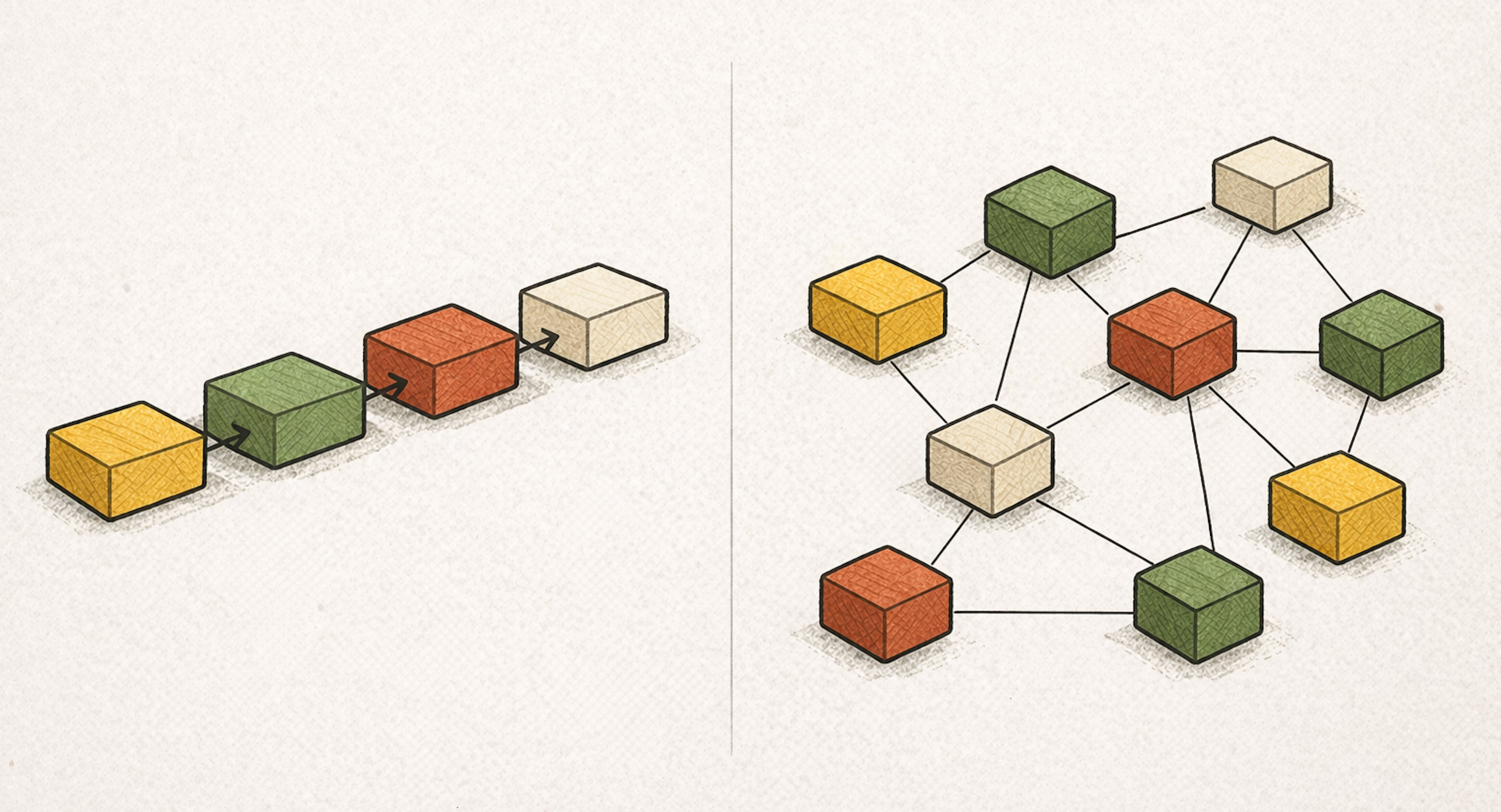
In a concurrent system, optimization at each node does not guarantee optimization of the whole. Each actor’s decision introduces variance relative to others.
The system therefore requires a mechanism that aligns distributed decisions across time and context.
That requirement defines orchestration.
The failure mode here is fragmentation—which is exactly what the AI operating model → is meant to prevent
2. What Orchestration Actually Does
Orchestration models solve a coordination problem that emerges when decision-making is distributed.
Each participant in an ecosystem processes information locally. They observe a subset of signals, apply their own decision logic, and act in ways that maximize their outcomes. These actions interact with the actions of others, producing system-level results.
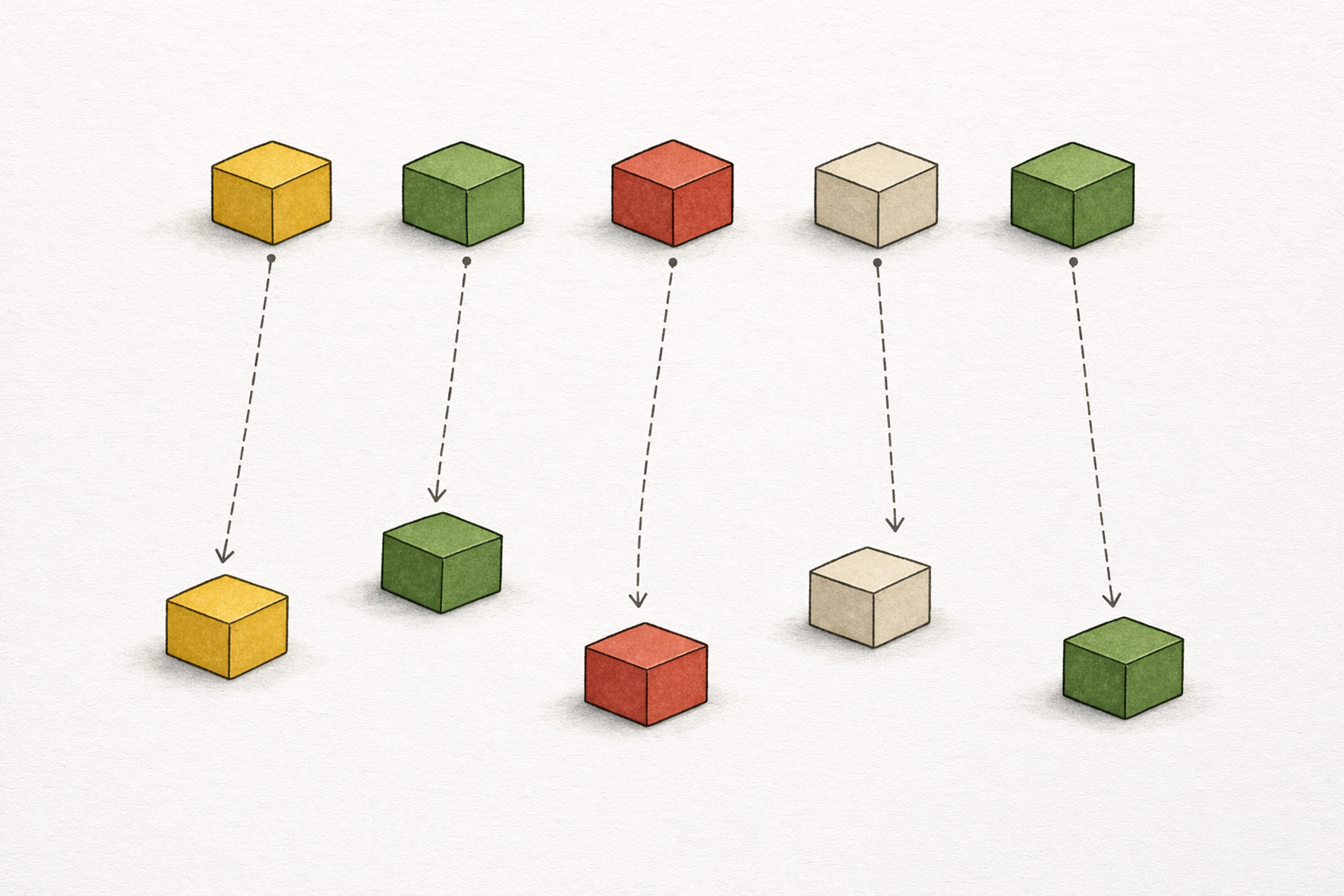
Without coordination, the system exhibits three properties:
decisions conflict across contexts
edge cases accumulate
outcomes become unpredictable
Orchestration introduces structure into this process.
Consider Stripe.
Stripe defines how payments are initiated, processed, and resolved across millions of independent implementations. It standardizes how errors are handled, how state is communicated, and how outcomes are interpreted.
This produces a shared operational logic across participants who never coordinate directly.
The result follows directly from the structure:
developers can predict system behavior
businesses can rely on consistent outcomes
improvements in handling propagate across all implementations
Orchestration aligns distributed decision-making by constraining how decisions are expressed and integrated.
3. The Three Layers of Orchestration
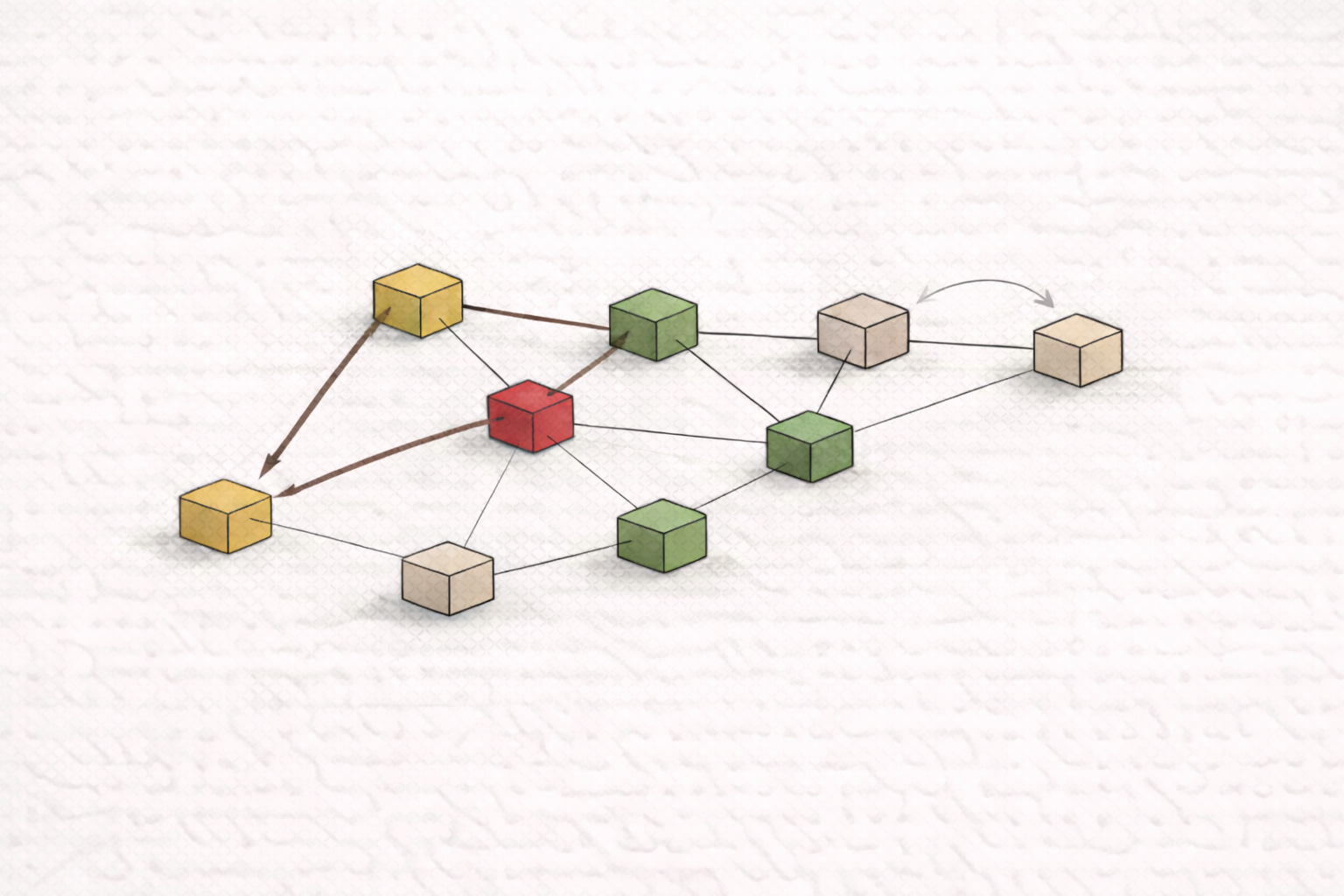
Orchestration in digital ecosystems operates across three layers because coordination requires alignment at the level of interaction, motivation, and adaptation.
These layers correspond to how actors connect, why they act, and how the system evolves.
Interaction Layer — Alignment of Interfaces
Actors interact through defined interfaces. These interfaces determine what information can be exchanged, what actions can be taken, and how state transitions occur.
In systems like Amazon, standardized interfaces allow sellers, logistics providers, and customers to operate within a shared structure. Each interaction follows predictable rules.
When interfaces are aligned, interactions become composable. One actor’s output can be reliably used as another actor’s input.
This reduces uncertainty at the point of interaction.
Incentive Layer — Alignment of Objectives
Actors pursue outcomes that improve their position. Coordination requires that these pursuits reinforce system-level coherence.
Amazon aligns incentives by linking seller success to customer satisfaction and operational performance. Visibility, revenue, and participation depend on behaviors that improve the system.
NVIDIA aligns incentives differently. Through CUDA, developers achieve higher performance by optimizing for NVIDIA’s architecture. Their local objective—performance—deepens system dependence.
In both cases, actors act independently while producing aligned outcomes because their incentives are structured to converge.
Learning Layer — Alignment of Adaptation
Systems evolve through feedback. Each interaction generates information about what works and what fails.
Coordination requires that this information updates the system’s decision logic and becomes available to others.
When Stripe improves fraud detection, the improvement affects all participants. When Amazon refines recommendations, the update propagates across the network.
Learning becomes a shared asset.
The system’s behavior changes as a function of accumulated experience.
4. The Orchestrator’s Paradox
The orchestrator occupies a central position because it defines the structures that enable coordination.
That position creates leverage over the system’s behavior.
At the same time, the system’s performance depends on the independent actions of participants.
This creates a structural constraint.
If the orchestrator constrains behavior directly, participants lose the ability to adapt to local conditions. The system becomes rigid.
If the orchestrator leaves behavior unconstrained, participants diverge in ways that reduce coherence. The system fragments.
Effective orchestration resolves this by constraining structure rather than behavior.
Apple Inc. applies this principle in the App Store. Interaction rules, performance standards, and interface guidelines are tightly defined. Within those constraints, developers explore a wide range of solutions.
Outcomes remain coherent because interactions follow shared rules, even as behavior varies.

