
Every Observation Is Framed
Why your frame shapes your strategy long before your data does


Book 0 · Issue 2 of 100 · Thinking Like a Strategist
Imagine two investors reading exactly the same quarterly earnings report. Every number, every chart, and every management statement is identical. Neither investor has access to information the other lacks. Yet one quietly closes the report convinced the business has entered a period of irreversible decline, while the other finishes reading with growing confidence that this is precisely the moment to invest.
Nothing in the report changed.
The interpretation did.
We often imagine that disagreement begins with facts, but it rarely does. Much more often it begins with the frame through which those facts are understood. By the time we believe we are simply observing reality, our minds have already decided what deserves attention, what should be compared, and which questions matter most. Interpretation doesn’t follow observation. It quietly accompanies it.
This becomes surprisingly difficult to notice because our own frame rarely feels like a frame. It feels like reality itself. When someone reaches a different conclusion from the same information, we instinctively assume they misunderstood the facts. Much less often do we ask whether they are looking through a different lens.

← Issue 1: The Map Is Not the Territory
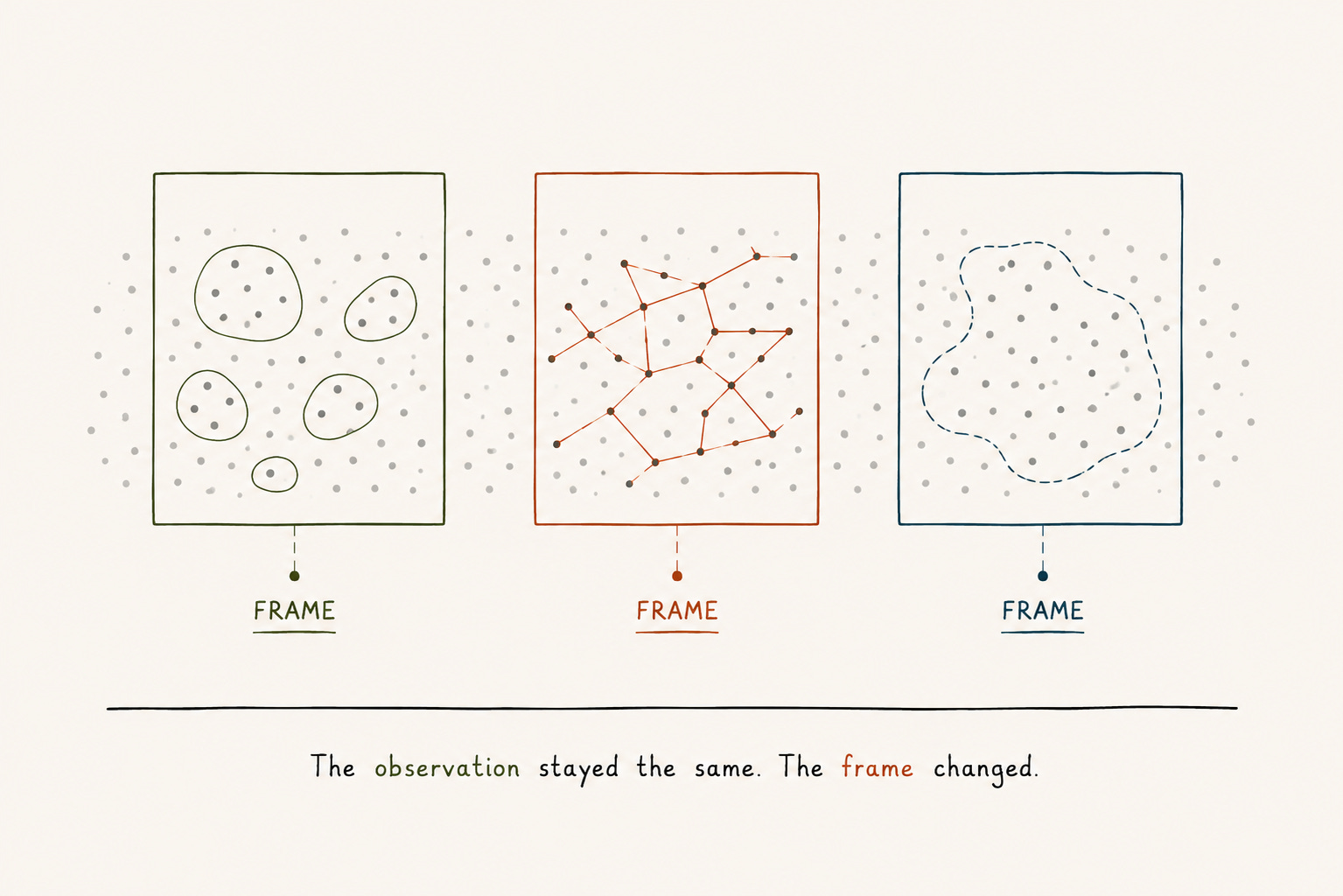
This distinction explains why intelligent people can disagree honestly without either side necessarily being irrational. One executive sees declining margins and concludes the business is weakening. Another sees the same numbers and concludes the company is deliberately sacrificing short-term profitability to strengthen its competitive position. One investor sees slowing user growth. Another sees a business reaching maturity and becoming more resilient. The facts remain remarkably stable while the strategic implications shift entirely.
Organizations develop these frames long before individual decisions are made. Every KPI, reporting structure, budgeting process, planning cycle, and performance metric quietly teaches people what deserves attention. Over time these filters become so familiar that they stop appearing as interpretations altogether. They simply become “the way we see the business.”
That is why strategic transformation is so difficult.
Changing strategy rarely begins with changing decisions.
It begins with changing what people notice.
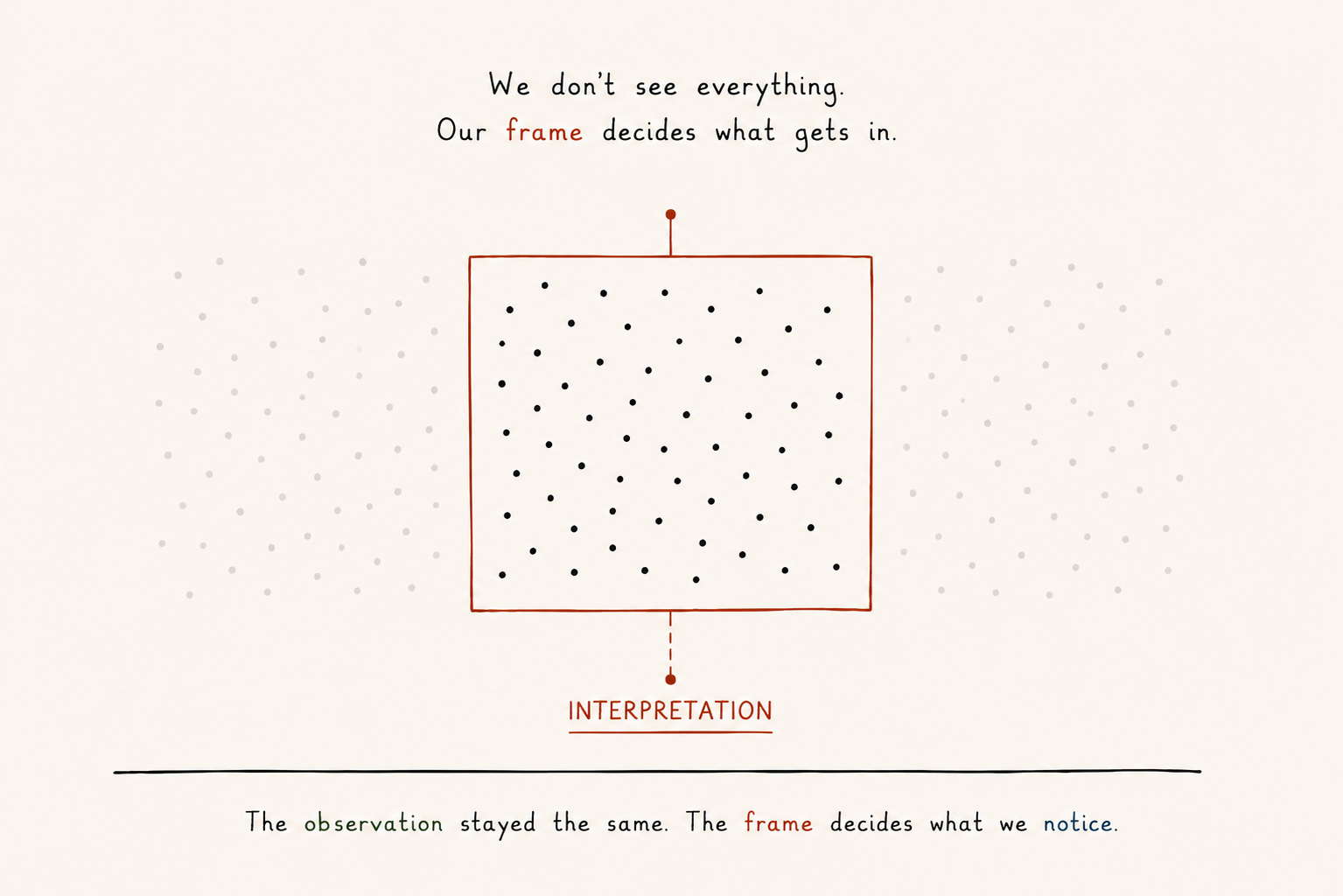
The arrival of artificial intelligence has made this challenge even more important rather than less. AI is often presented as a way of making decisions objectively because it processes far more information than any individual ever could. In reality, every model still interprets the world through assumptions embedded in its training data, objectives, prompts, reward functions, and evaluation criteria. Artificial intelligence does not eliminate framing. It simply moves framing into places that are often less visible.
This is why two people can ask different questions of the same model and receive answers that reinforce entirely different strategies. It is also why organizations increasingly need to understand not only the outputs their systems produce, but the assumptions those systems quietly apply before producing them.
History provides remarkably consistent examples of this pattern. Netflix and Blockbuster observed the same customers, the same technologies, and the same competitive landscape. The difference was not access to information. It was the frame through which that information was interpreted. Blockbuster understood the business as video rental. Netflix increasingly understood it as convenient access to entertainment. Once the frame changed, the strategy followed naturally.
The same question appears today when people discuss OpenAI. Some describe it primarily as a software company. Others increasingly view it as infrastructure for future economies. Others again see it as a geopolitical capability whose strategic importance extends far beyond technology. None of these observations begin with different facts. They begin with different frames.
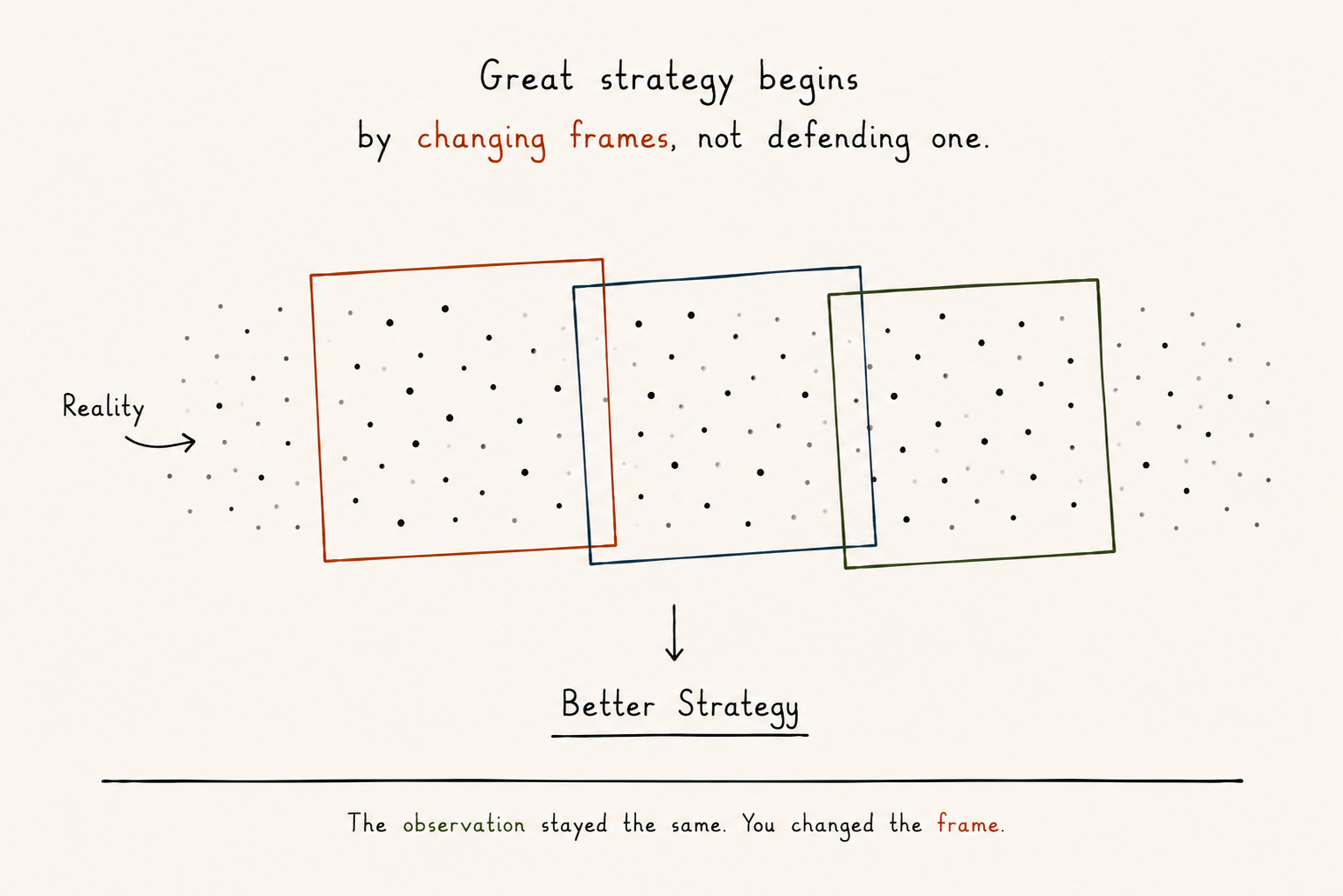
Great strategists therefore spend remarkably little time defending the frame they already possess. They deliberately expose themselves to competing perspectives because every new frame reveals possibilities the previous one made invisible. Collecting more information can certainly improve a decision, but changing the frame through which existing information is interpreted often changes it much more dramatically.
Organizations rarely fail because information was unavailable. More often they fail because new information continues to be interpreted through an old frame. By the time reality forces a different conclusion, the strategic opportunity has usually disappeared.
The next time you find yourself asking whether you have enough information to make a decision, a more useful question may come first.
What frame am I using to make sense of what I’m already seeing?
Because changing your frame often changes your strategy long before changing your data ever will.
If this resonated, two pieces from the archive apply the same idea in practice:
→ Problem Discovery Canvas — how the problem you choose to solve is already a frame
→ Perceived vs Delivered Value — when builders and users read the same product through different frames

Hit subscribe to get it in your inbox. And if this spoke to you:
➡️ Forward this to a strategy peer who’s feeling the same shift. We’re building a smarter, tech-equipped strategy community—one layer at a time.
Let’s stack it up.
A. Pawlowski | The Strategy Stack